Description
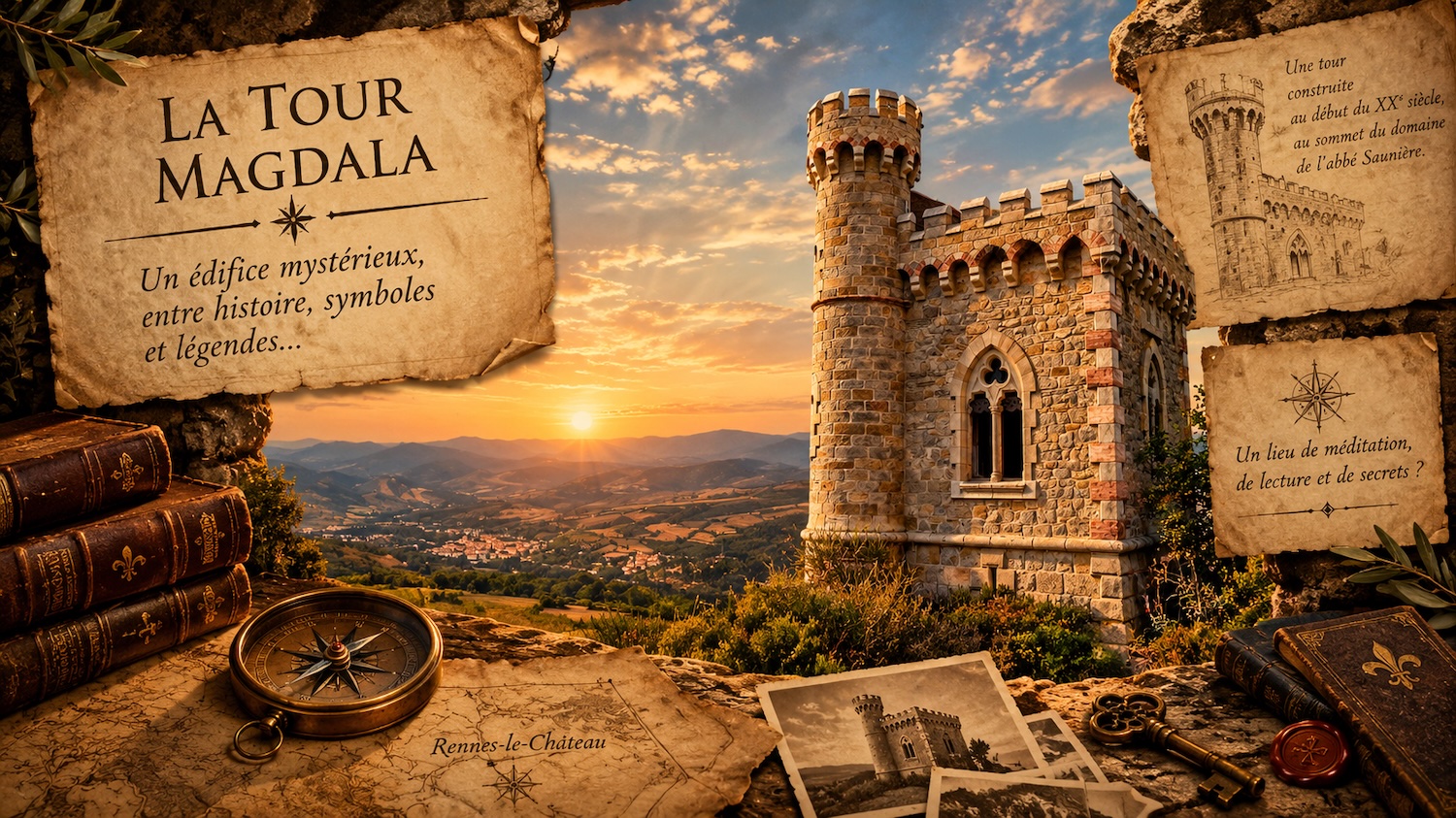
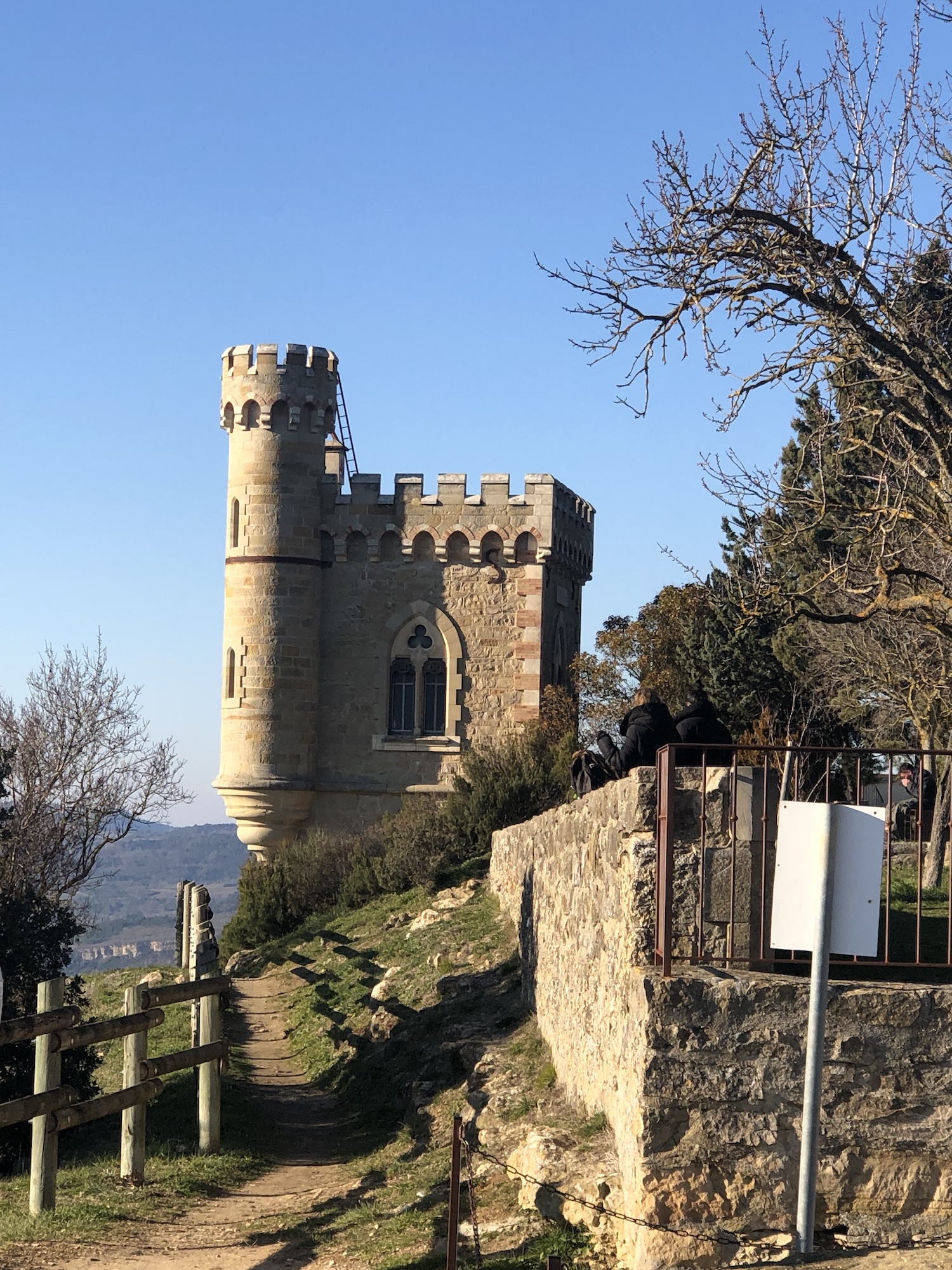
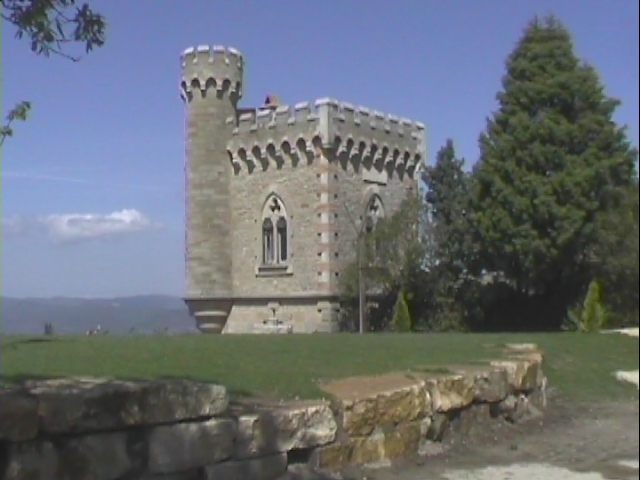
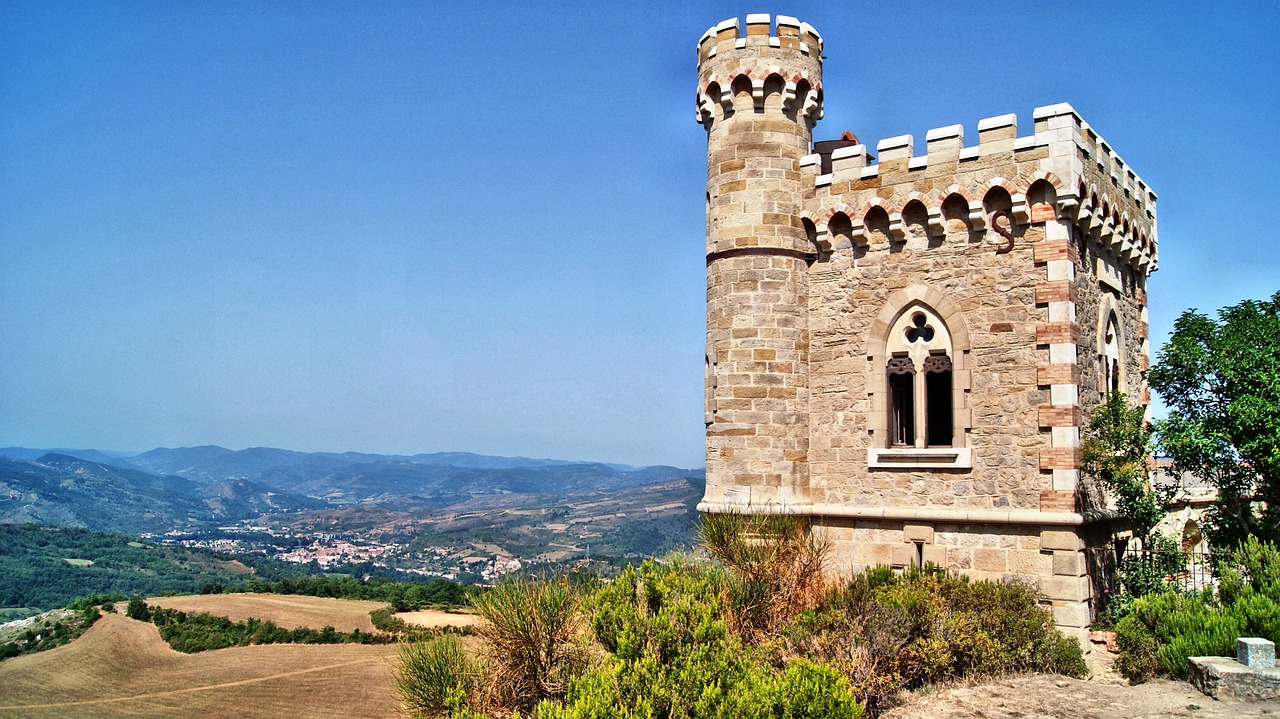
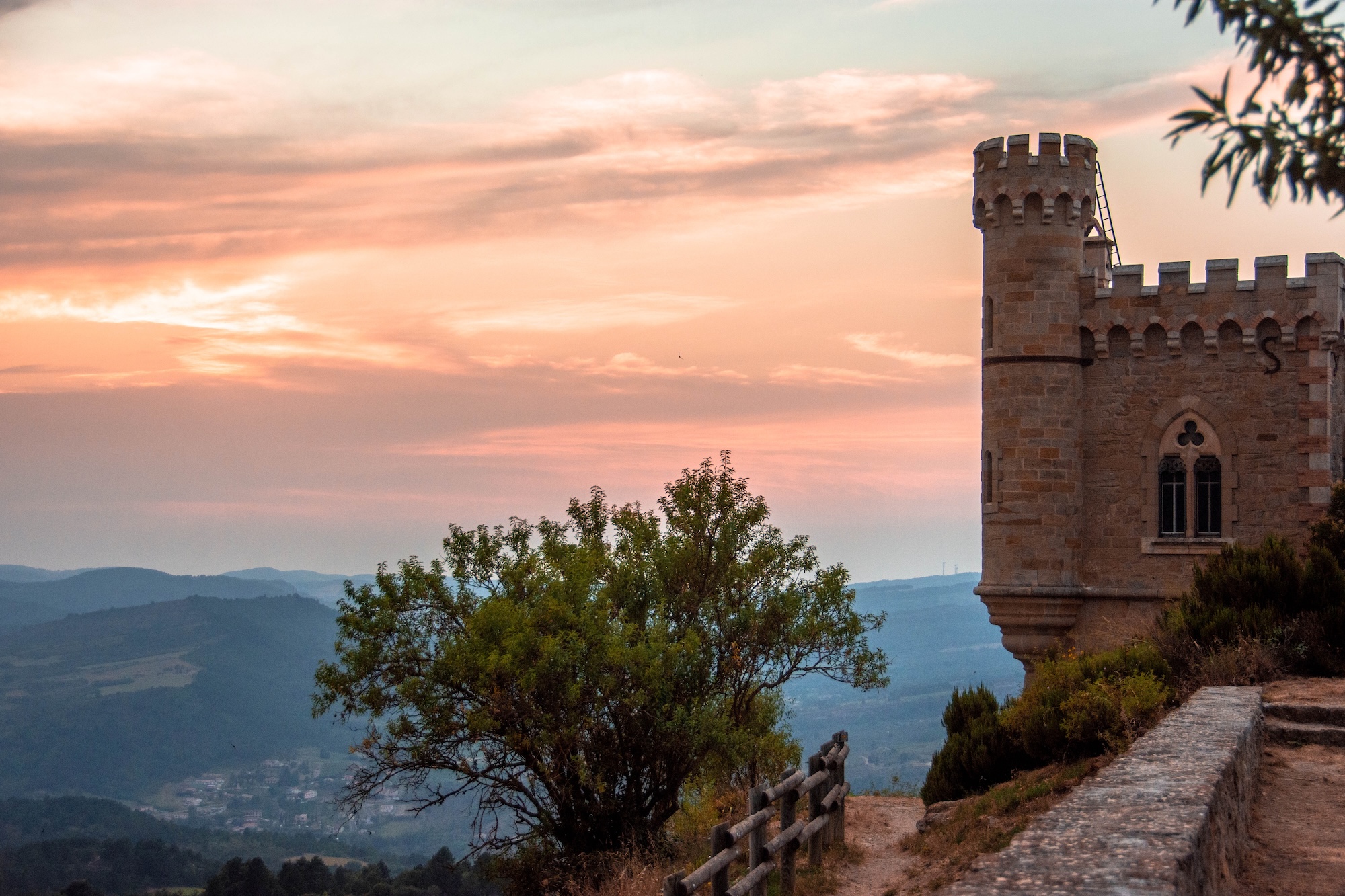
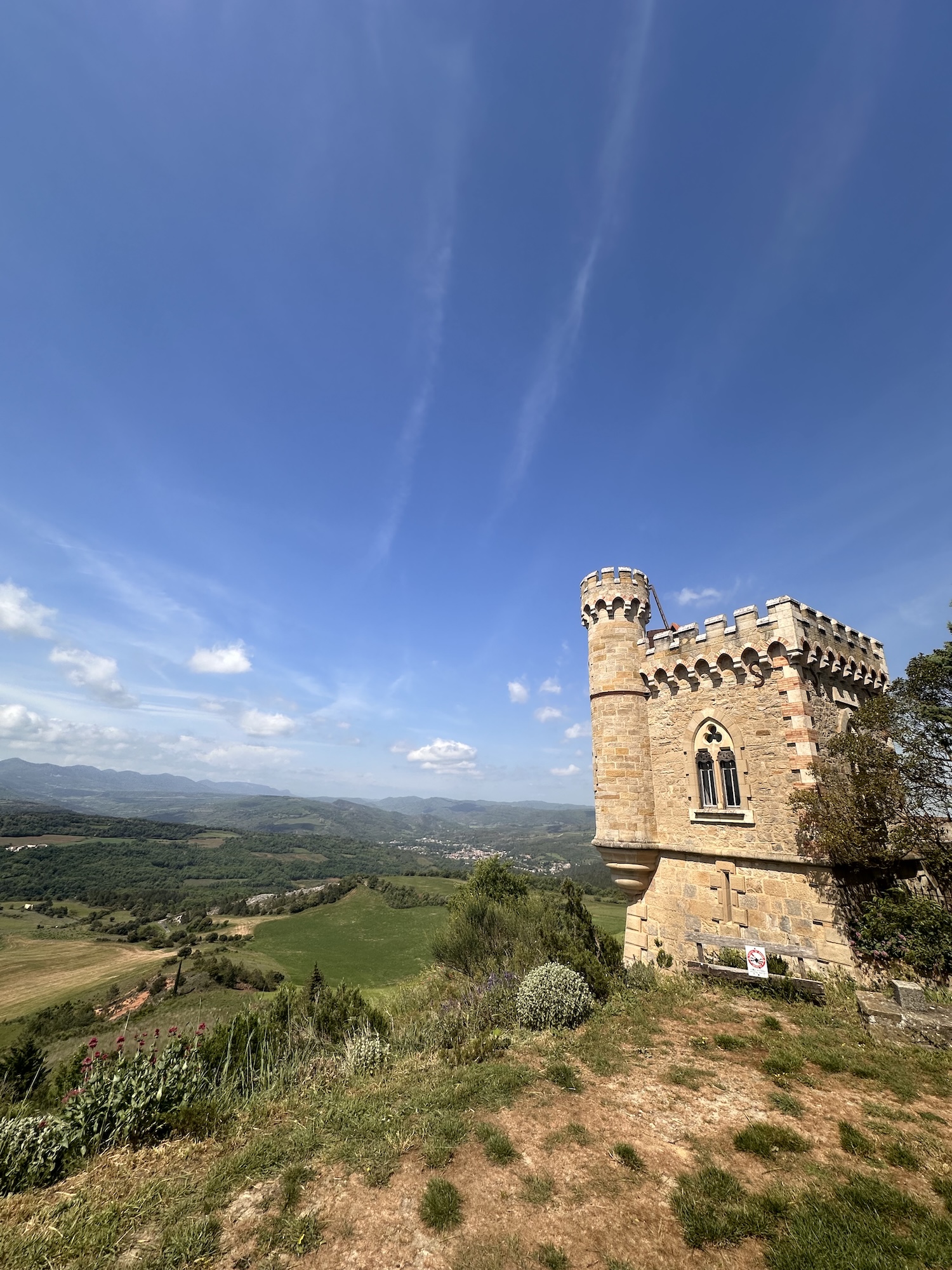
La Tour Magdala est l’édifice le plus emblématique de Rennes-le-Château. Construite entre 1900 et 1901 à l’initiative de l’abbé Bérenger Saunière, elle domine le village depuis un promontoire rocheux et fait partie d’un ensemble architectural comprenant également la Villa Béthania, l’Orangeraie et les jardins. Bien qu’elle soit communément appelée « tour », il s’agit en réalité d’une bibliothèque-belvédère, conçue comme un lieu de travail, de lecture et de contemplation.
Son nom fait référence à Marie-Madeleine, patronne de l’église paroissiale de Rennes-le-Château, souvent désignée sous le nom de Marie de Magdala. Devenue l’un des symboles du village, la Tour Magdala attire chaque année des milliers de visiteurs fascinés par son architecture autant que par les mystères qui l’entourent.
The <u>Magdala Tower</u> is the most iconic building in <u>Rennes-le-Château</u>. Built between 1900 and 1901 at the initiative of Father <u>Bérenger Saunière</u>, it overlooks the village from a rocky promontory and forms part of an architectural ensemble that also includes the <u>Villa Béthania</u>, the <u>Orangery</u> and the gardens. Although commonly called a "tower," it is in fact a library-belvedere, designed as a place for work, reading and contemplation.
Its name refers to <u>Mary Magdalene</u>, patron saint of the parish church of <u>Rennes-le-Château</u>, often called Mary of Magdala. Having become one of the village's symbols, the <u>Magdala Tower</u> attracts thousands of visitors every year, fascinated as much by its architecture as by the mysteries surrounding it.
History
À la fin du XIXᵉ siècle, Bérenger Saunière entreprend une série de travaux qui transforment profondément son environnement. Après la restauration de l’église Sainte-Marie-Madeleine, il acquiert plusieurs terrains voisins et fait édifier un véritable domaine privé.
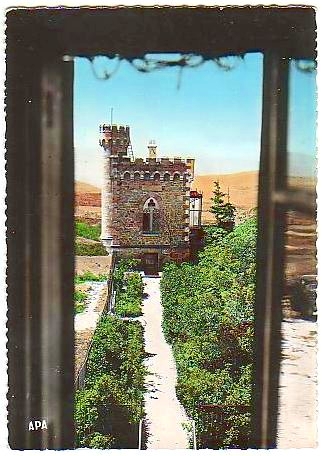
La construction de la Tour Magdala débute vers 1900 et s’achève l’année suivante. Reliée à la Villa Béthania par une terrasse et un chemin de ronde, elle est destinée à accueillir la bibliothèque personnelle du prêtre. Saunière y rassemble plusieurs centaines d’ouvrages consacrés à la théologie, à l’histoire, à l’archéologie, à la littérature et aux langues anciennes.
Après la mort de Bérenger Saunière en 1917, sa gouvernante et fidèle collaboratrice Marie Dénarnaud conserve le domaine jusqu’à son décès en 1953. La propriété change ensuite plusieurs fois de mains avant d’être acquise par la commune de Rennes-le-Château. Restaurée et ouverte au public, la Tour Magdala est aujourd’hui l’un des principaux sites touristiques de l’Aude.
At the end of the 19th century, <u>Bérenger Saunière</u> undertook a series of works that profoundly transformed his surroundings. After restoring the <u>Sainte-Marie-Madeleine church</u>, he acquired several neighboring plots of land and had a veritable private estate built.
Construction of the <u>Magdala Tower</u> began around 1900 and was completed the following year. Connected to the <u>Villa Béthania</u> by a terrace and a walkway, it was intended to house the priest's personal library. Saunière gathered there several hundred works devoted to theology, history, archaeology, literature and ancient languages.
After <u>Bérenger Saunière</u>'s death in 1917, his housekeeper and loyal collaborator <u>Marie Dénarnaud</u> kept the estate until her own death in 1953. The property then changed hands several times before being acquired by the municipality of <u>Rennes-le-Château</u>. Restored and opened to the public, the <u>Magdala Tower</u> is today one of the main tourist sites in the Aude department.
Architecture
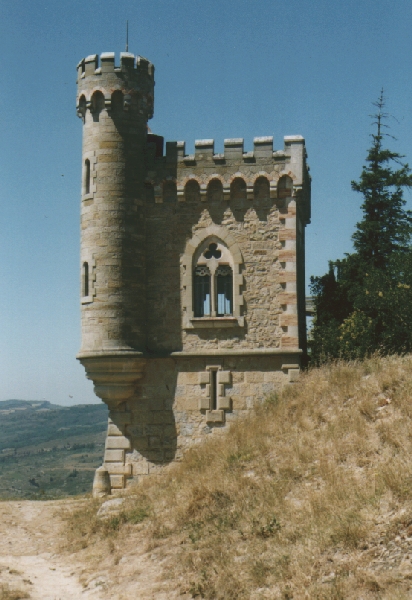
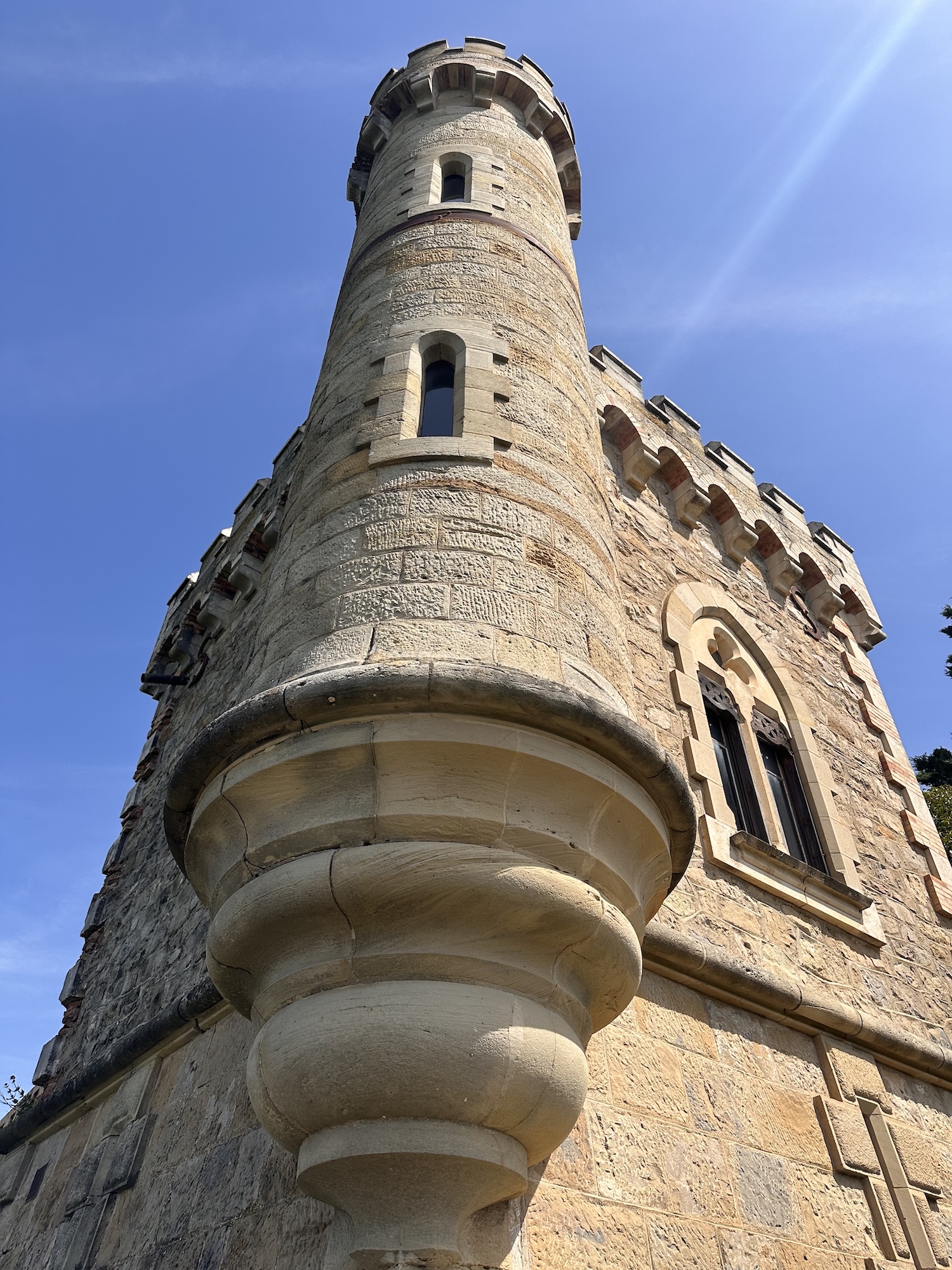
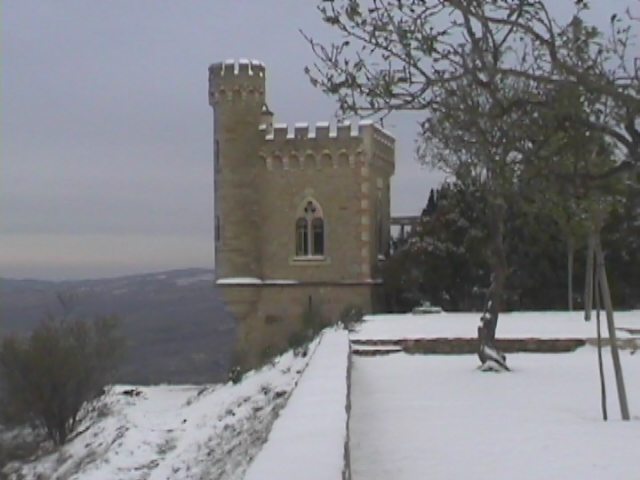
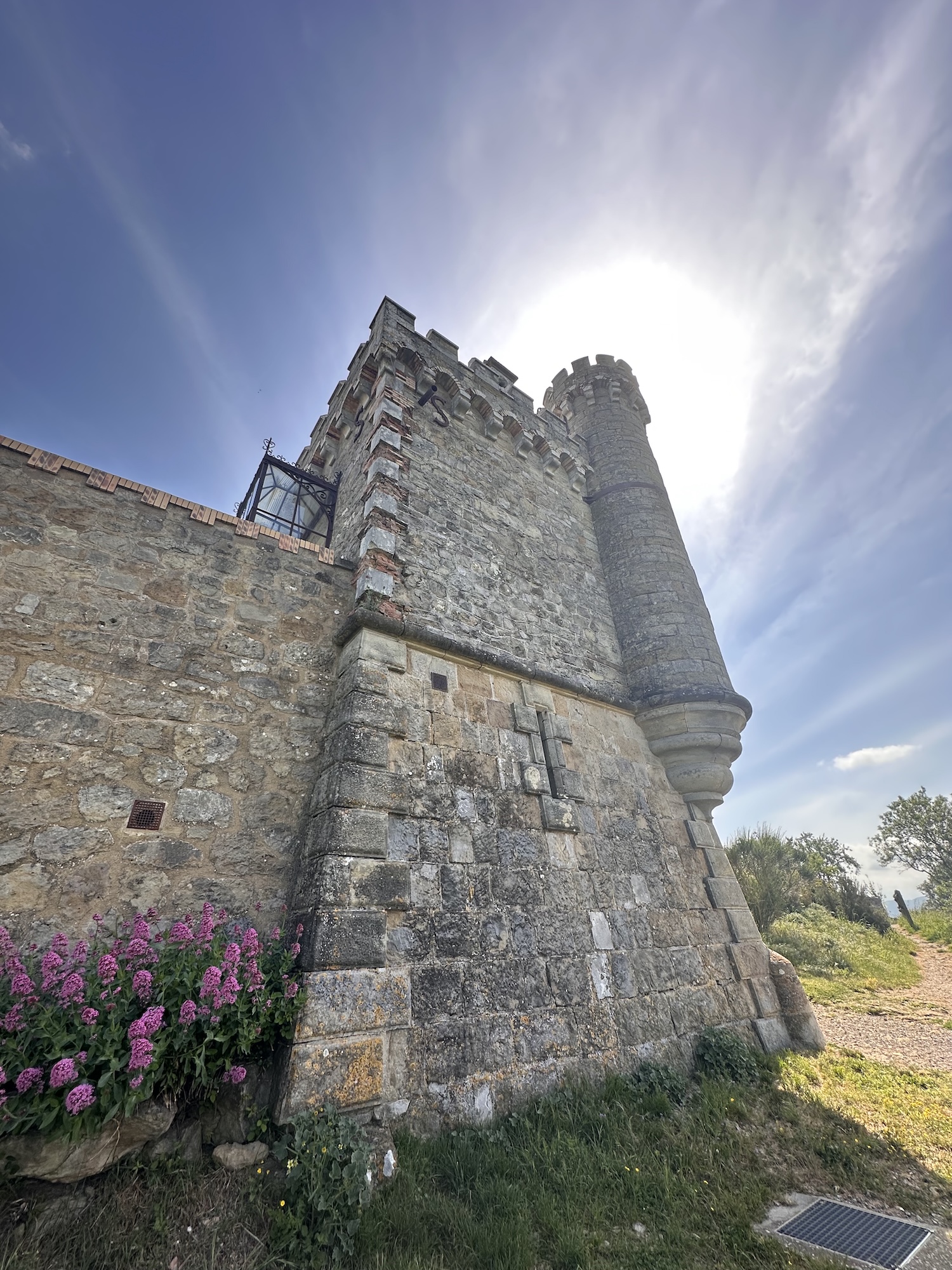
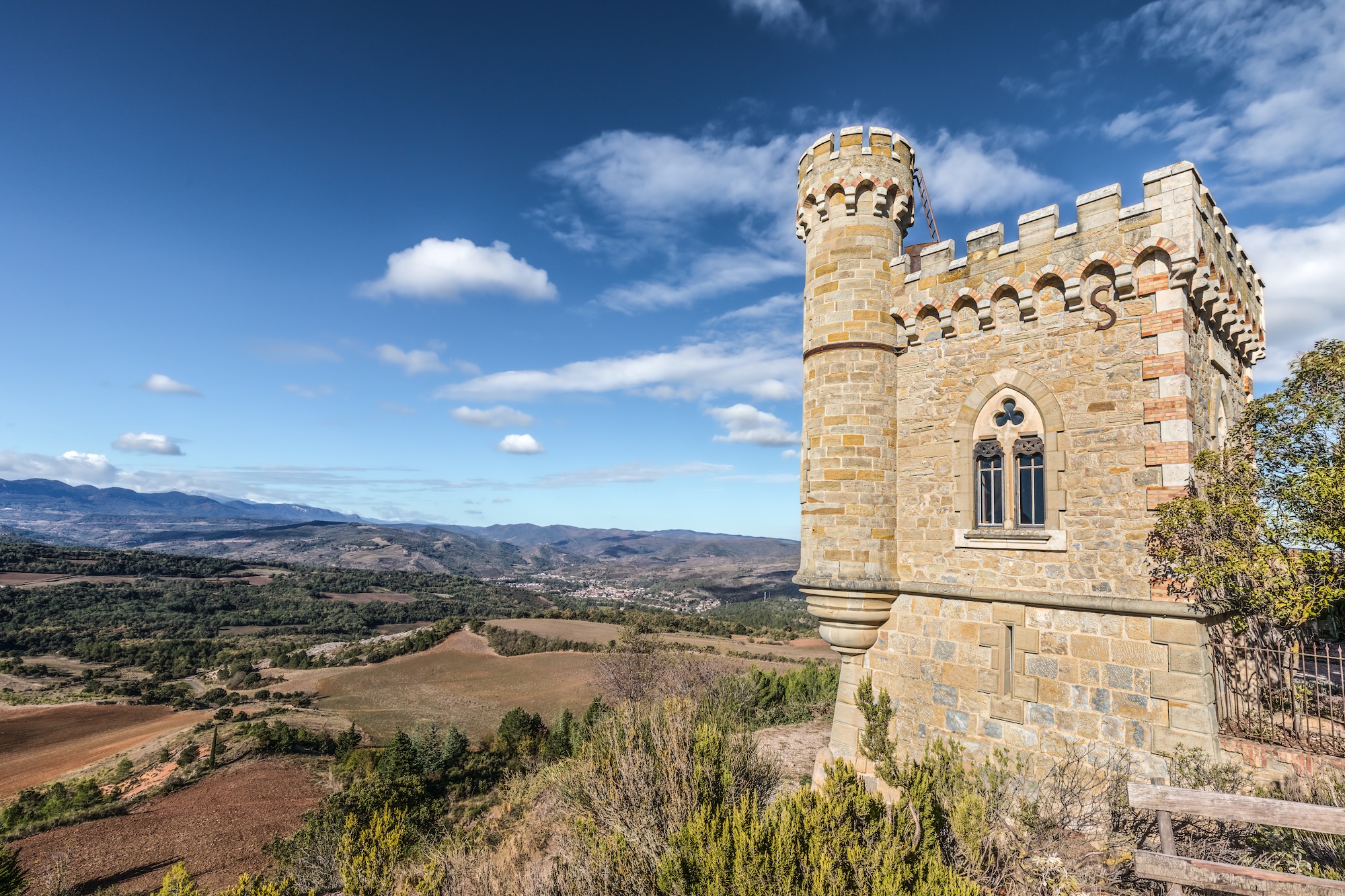
Construite en pierre locale, la Tour Magdala adopte un style néogothique inspiré de l’architecture médiévale. De plan presque carré, elle est flanquée d’une tourelle d’escalier cylindrique qui permet d’accéder à la terrasse supérieure.
L’intérieur est relativement sobre. La salle principale servait de bibliothèque et de cabinet de travail à Bérenger Saunière. De larges fenêtres offrent une vue panoramique sur la vallée de l’Aude, le plateau du Razès et les premiers contreforts des Pyrénées.
La terrasse constitue l’un des éléments les plus remarquables de l’édifice. Bordée de créneaux décoratifs, elle permet d’observer les paysages environnants dans toutes les directions. Cette position dominante a largement contribué à la réputation de la tour.
Bien que son architecture évoque une construction défensive, la Tour Magdala n’a jamais eu de vocation militaire. Elle répond avant tout à un projet esthétique et personnel, caractéristique du goût de Bérenger Saunière pour les aménagements originaux.
Built of local stone, the <u>Magdala Tower</u> adopts a neo-Gothic style inspired by medieval architecture. Almost square in plan, it is flanked by a cylindrical stair turret providing access to the upper terrace.
The interior is relatively plain. The main room served as <u>Bérenger Saunière</u>'s library and study. Large windows offer a panoramic view over the Aude valley, the Razès plateau and the first foothills of the Pyrenees.
The terrace is one of the building's most remarkable features. Lined with decorative battlements, it allows visitors to observe the surrounding landscape in every direction. This dominant position has greatly contributed to the tower's reputation.
Although its architecture evokes a defensive structure, the <u>Magdala Tower</u> never had a military purpose. It is above all an aesthetic and personal project, characteristic of <u>Bérenger Saunière</u>'s taste for original developments.
Associated mysteries
La Tour Magdala occupe une place centrale dans les nombreuses théories développées autour de l’affaire de Rennes-le-Château.
Certains auteurs ont avancé que la bibliothèque aurait renfermé des documents anciens, des parchemins ou des manuscrits exceptionnels découverts par Bérenger Saunière lors de la restauration de son église. D’autres pensent que la tour aurait servi d’observatoire astronomique, de poste de surveillance ou encore de lieu de réunion discret pour des visiteurs prestigieux.
La disposition des bâtiments, l’orientation de la terrasse, certaines proportions architecturales ou encore le choix du nom « Magdala » ont également fait l’objet de nombreuses interprétations symboliques et ésotériques.
À ce jour, aucune preuve historique ne confirme ces hypothèses. Les archives disponibles montrent que la Tour Magdala a été conçue comme une bibliothèque privée intégrée à un ensemble résidentiel. Les interprétations qui lui attribuent une fonction secrète relèvent essentiellement de la littérature consacrée aux mystères de Rennes-le-Château.
Cette dualité entre réalité historique et imaginaire explique en grande partie la fascination que continue d’exercer la Tour Magdala auprès des chercheurs, des passionnés d’histoire et des amateurs d’ésotérisme.
The <u>Magdala Tower</u> occupies a central place in the many theories developed around the <u>Rennes-le-Château</u> affair.
Some authors have suggested that the library once contained ancient documents, parchments or exceptional manuscripts discovered by <u>Bérenger Saunière</u> during the restoration of his church. Others believe the tower may have served as an astronomical observatory, a lookout post, or even a discreet meeting place for prestigious visitors.
The layout of the buildings, the orientation of the terrace, certain architectural proportions, and even the choice of the name "Magdala" have also been the subject of numerous symbolic and esoteric interpretations.
To date, no historical evidence confirms these hypotheses. The available archives show that the <u>Magdala Tower</u> was designed as a private library integrated into a residential estate. Interpretations attributing a secret function to it belong essentially to the literature devoted to the mysteries of <u>Rennes-le-Château</u>.
This duality between historical reality and imagination largely explains the fascination that the <u>Magdala Tower</u> continues to exert on researchers, history enthusiasts and lovers of esotericism.
Visit
La Tour Magdala fait aujourd’hui partie du Domaine de l’abbé Saunière, propriété de la commune de Rennes-le-Château. Elle est accessible dans le cadre de la visite du domaine, qui comprend également la Villa Béthania, les jardins, l’Orangerie et l’église Sainte-Marie-Madeleine.
Depuis la terrasse, les visiteurs bénéficient d’un panorama exceptionnel sur la haute vallée de l’Aude, le massif des Corbières et les Pyrénées. Des panneaux d’interprétation retracent l’histoire du site, les travaux réalisés par Bérenger Saunière et les principales étapes de l’affaire de Rennes-le-Château.
La visite permet également de découvrir l’environnement dans lequel vivait le célèbre curé et de mieux comprendre le contexte historique ayant donné naissance à l’un des plus grands mystères du patrimoine français.
The <u>Magdala Tower</u> is today part of the <u>Domaine de l'abbé Saunière</u> (Abbé Saunière Estate), owned by the municipality of <u>Rennes-le-Château</u>. It can be visited as part of the estate tour, which also includes the <u>Villa Béthania</u>, the gardens, the <u>Orangery</u> and the <u>Sainte-Marie-Madeleine church</u>.
From the terrace, visitors enjoy an exceptional panorama over the upper Aude valley, the Corbières massif and the Pyrenees. Interpretive panels retrace the history of the site, the works carried out by <u>Bérenger Saunière</u> and the main stages of the <u>Rennes-le-Château</u> affair.
The visit also offers a chance to discover the environment in which the famous priest lived and to better understand the historical context that gave rise to one of the greatest mysteries of French heritage.
Sources
Archives of the municipality of Rennes-le-Château.
Diocesan archives of Carcassonne concerning Bérenger Saunière's works.
Old postcards of the Saunière estate (early 20th century).
Historical photographs of the Magdala Tower and the Villa Béthania.
René Descadeillas, Mythologie du trésor de Rennes.
René Descadeillas, Rennes et ses derniers seigneurs.
Christian Doumergue, Bérenger Saunière, prêtre libre à Rennes-le-Château.
Jean-Jacques Bedu, works devoted to Rennes-le-Château.
Pierre Jarnac, Les archives de l'abbé Saunière.